A bedroom feature wall can change the whole feel of the room faster than a full redesign. The best feature wall ideas for bedrooms do not just add colour – they give the space focus, improve balance and make the room feel more considered from the moment you walk in.
That matters because bedrooms are different from living spaces. You want interest, but not visual noise. You want character, but not something that feels tiring after a few weeks. A good feature wall should make the room feel calmer, smarter and better finished, not simply louder.
What makes a bedroom feature wall work?
In most bedrooms, the wall behind the bed is the natural place to start. It already acts as the visual anchor of the room, so highlighting it usually feels intentional rather than forced. That said, it is not the only option. In awkward layouts, chimney breast walls, alcoves or the wall opposite the bed can sometimes work better.
The main thing is proportion. Dark shades can look excellent in a large room with decent natural light, but they may feel heavy in a smaller bedroom unless the rest of the palette is kept light. Strong patterns can create impact, but if the room already has busy flooring, bold bedding or lots of furniture, a quieter finish is often the smarter choice.
This is where experience matters. A feature wall should suit the room as it is actually used, not just look good in isolation.
12 feature wall ideas for bedrooms that feel considered
1. Deep painted colour behind the bed
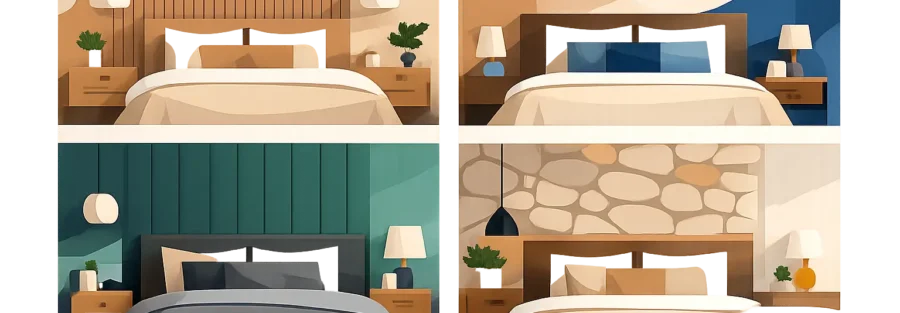
A painted feature wall remains one of the most reliable options because it is clean, effective and versatile. Deep blue, olive green, charcoal and warm taupe are all popular choices for bedrooms because they bring depth without making the space feel harsh.
The finish matters as much as the shade. Flat matt can create a softer, more restful look, while a subtle durable finish tends to be more practical in family homes or rental properties. If the goal is a calm, polished room rather than a trend-led statement, this is usually the safest choice.
2. Half-wall paint with a crisp dividing line
If a full-height dark wall feels too much, a half-wall treatment can give you contrast without overpowering the room. This works especially well in smaller bedrooms where you want visual interest but still need to keep the space feeling open.
A painted lower section behind the bed can also help frame bedside tables and headboards neatly. Done well, it looks purposeful and architectural rather than decorative for its own sake.
3. Panel moulding for a classic finish
Wall panelling adds structure and character in a way paint alone cannot. Shaker-style moulding is particularly effective in bedrooms because it feels elegant without being fussy. It suits period homes, but it also works well in more modern properties when kept simple.
Painted in one colour from top to bottom, panelling creates depth through shadow and detail rather than contrast alone. It is a strong option if you want a room to feel more complete and higher end.
4. Slatted timber for warmth and texture
Timber slat walls have become popular for good reason. They bring warmth, rhythm and a more contemporary feel to the room, especially when paired with neutral walls and simple furniture.
The trade-off is that they need careful installation. Uneven spacing, poor alignment or a finish that does not suit the rest of the room can make the result feel more DIY than designed. In the right setting, though, a timber feature wall can make a bedroom feel much more bespoke.
5. Wallpaper with a soft pattern
Wallpaper is one of the best feature wall ideas for bedrooms if the room needs personality rather than just colour. A soft botanical print, subtle geometric design or textured-effect paper can give the wall movement and interest without making the space feel busy.
For bedrooms, restraint usually works best. Loud prints may suit some interiors, but in most homes a quieter pattern gives longer-lasting appeal. It is easier to live with, easier to style around and less likely to date quickly.
6. Textured plaster or decorative finish
If you want something more individual, a decorative plaster or specialist painted finish can create a feature wall with real depth. This could be a soft concrete effect, a limewash-style finish or a subtle tonal texture that changes with the light.
This approach works well when the overall design is pared back. Because the interest comes from texture and tone, it can feel sophisticated without trying too hard. It is particularly useful in bedrooms where bold contrast would be too stark.
7. A darker wall in a loft or awkward room
Bedrooms with sloped ceilings or unusual layouts often benefit from a feature wall because it helps organise the space visually. A darker shade on one key wall can make the room feel more grounded and less awkward.
In these cases, the feature wall is not just decorative – it helps correct the room. Used carefully, colour can draw attention to the best part of the layout and reduce focus on angles or uneven proportions.
8. Upholstered wall panels for a softer look
For a more luxurious finish, upholstered panels behind the bed can create a hotel-style feel while also adding softness. This works particularly well in main bedrooms where comfort is a priority and the room needs a stronger focal point.
It is not the right choice for every property. In compact rooms, it can take up visual and physical space quite quickly. But in the right setting, it adds texture, comfort and a clear sense of design.
9. A mural used with restraint
A wall mural can be very effective in a bedroom, but only when the design suits the size and mood of the room. Soft landscapes, abstract washes and faded natural scenes tend to work better than anything too sharp or high contrast.
The reason is simple. Bedrooms should feel restful. If the mural dominates every other element, it can end up feeling more distracting than impressive. When balanced properly, though, it can create real impact.
10. Built-in joinery as the feature
Not every feature wall needs to rely on paint or wallpaper. Bespoke wardrobes, shelving or fitted headboard joinery can become the feature in their own right. This is a practical option for bedrooms where storage matters just as much as appearance.
A well-designed fitted wall can make the room feel larger, tidier and more intentional. It is especially useful in London homes where every bit of space needs to work hard.
11. Contrasting ceiling and wall combination
Sometimes the strongest effect comes from treating the wall and ceiling together. Extending the feature colour slightly onto the ceiling or using a coordinated tone above can make the room feel more enveloping and balanced.
This works best in bedrooms with decent ceiling height or plenty of natural light. In tighter spaces, it can feel enclosed if the colours are too heavy. The success of this idea depends on the room’s proportions.
12. Soft neutral texture for a quieter statement
A feature wall does not have to be bold to be effective. In many bedrooms, the best result comes from using soft neutral tones with a slight variation in texture – for example, a warm stone shade against smoother painted walls, or a textured wallpaper in a similar colour family.
This creates interest without disrupting the calm feel of the room. If you want the space to feel timeless rather than trend-driven, this is often the better route.
How to choose the right feature wall for your bedroom
Start with what the room needs most. If it lacks warmth, timber or deeper paint tones may help. If it feels flat, panelling or textured finishes can add depth. If the layout is awkward, a feature wall can create structure and direct the eye where you want it to go.
It is also worth thinking about what stays and what changes. A wallpaper or mural may look brilliant with your current bed and soft furnishings, but will it still work if those pieces change later on? Painted finishes and panelling usually offer more flexibility over time.
Lighting should never be an afterthought. A wall that looks rich and balanced in daylight can appear dull or overpowering under poor bedside lighting. Before committing to any finish, it helps to consider how the room feels in the morning, evening and on darker winter days.
Common mistakes to avoid
The biggest mistake is choosing a feature just because it is fashionable. Bedrooms need a different approach from kitchens, hallways or living rooms. What works well in a social space can feel too sharp or heavy where you sleep.
Another common issue is poor preparation. Even the best paint, wallpaper or decorative finish will not look right on uneven walls or badly repaired surfaces. Crisp lines, clean edges and proper surface preparation are what make a feature wall look high quality rather than rushed.
It is also easy to overdo it. If the wall is bold, keep the surrounding elements more controlled. If the room already has patterned curtains, statement lighting and strong bedding, the feature may need to be more understated.
When professional help makes the difference
A feature wall sounds simple, but the finish is what people notice. Uneven paint coverage, misaligned wallpaper, poor joinery details or rough prep work can spoil the overall effect very quickly.
For homeowners who want the room to feel properly transformed, professional decorating and finishing work often makes the real difference. At Adria P&D, we see feature walls not as add-ons, but as part of a complete room scheme that needs to feel balanced, durable and well executed.
The best bedroom feature wall is the one that still feels right months later – calm, polished and completely at home in the space.