
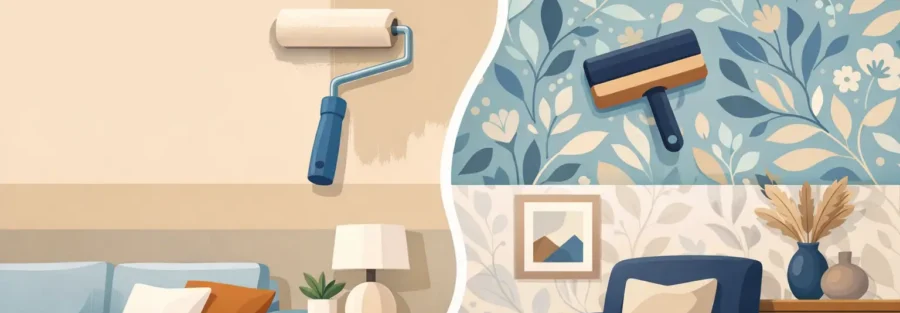
A newly prepared room can look completely different depending on one decision: painted walls or wallpaper. Both can create a polished, personal finish, but they ask different things of the room, the existing surfaces and the people living or working there. The right choice is not simply about what looks best on a sample board. It is about how you use the space, how much natural light it receives and how long you want the finish to work hard before it needs attention.
For homeowners, landlords and business owners, getting this decision right early helps the rest of the decorating project run smoothly. A carefully chosen wall finish can make a narrow hallway feel lighter, give a bedroom more character or help a rental property feel well cared for from the first viewing.
Painted walls or wallpaper: start with the room
Paint is often the most flexible choice when you want a clean, cohesive look across several rooms. It works particularly well in open-plan spaces, hallways and rooms with awkward corners, fitted furniture or numerous doors and windows. With the right preparation, a quality painted finish creates calm, uninterrupted walls and allows features such as skirting boards, coving and joinery to stand out.
Wallpaper brings pattern, texture and depth that paint cannot always replicate. It can make a dining room feel more considered, turn an otherwise plain cloakroom into a memorable space or create a focal wall behind a bed. Modern designs range from subtle linen-effect textures to bold botanical prints, so wallpaper does not have to mean a busy or traditional interior.
The key is to consider the room as a whole. A large south-facing lounge may carry a deeper paint colour or a richly patterned paper beautifully. In a small, low-lit room, a pale paint or a wallpaper with a light-reflective finish may be a better fit. Pattern can disguise minor visual imperfections, but a strong repeat can also make a compact room feel crowded if it is used on every wall.
When painted walls are the better option
Painted walls are a practical choice when adaptability matters. If you enjoy changing colours, are preparing a property for sale or letting, or want a finish that can be refreshed without redecorating an entire room, paint gives you useful freedom. A scuff on a painted wall can often be cleaned or touched up, provided the original paint has been kept and the finish has been applied consistently.
Paint is also well suited to busy homes. Washable finishes are available for areas that see fingerprints, muddy paws and everyday wear, such as staircases, family kitchens and entrance halls. The sheen level matters here. Matt paint gives a soft, contemporary appearance, but very flat finishes can mark more easily unless a durable formulation is selected. Eggshell or satin finishes tend to be more forgiving in hardworking areas, though they can reveal uneven wall preparation more readily.
Colour is another advantage. A carefully selected neutral can connect several rooms, while a darker shade can give a snug, study or dining area a more intimate feel. Painting a ceiling, walls and woodwork in closely related tones can also make an awkwardly proportioned space feel more settled.
That said, paint is only as good as the surface beneath it. Cracks, old repairs, staining, flaky coatings and uneven plaster need proper attention before the first coat goes on. Rushing that stage often leads to a finish that looks disappointing once daylight hits it.
Preparation makes the painted finish
Professional preparation usually involves protecting the room, filling and sanding imperfections, stabilising unsuitable surfaces and priming where needed. The aim is not merely to apply colour. It is to create an even surface that accepts paint properly and remains neat around corners, sockets, woodwork and ceilings.
This is especially relevant in older North London homes, where walls may have layers of previous decoration or movement-related hairline cracks. Treating the underlying issue and preparing the surface carefully makes a visible difference to the final result.
When wallpaper earns its place
Wallpaper is ideal when you want the wall treatment to be part of the design rather than just the background. A well-chosen paper can introduce warmth through texture, soften a room with a fabric-like finish or provide a distinctive pattern that ties together furnishings and lighting.
Feature walls remain popular for good reason, but they work best when they have a purpose. The wall behind a headboard, the chimney breast in a lounge or the back wall of a dining area naturally draws the eye. Wallpapering one of these surfaces can add character without overwhelming the room. In smaller spaces such as a downstairs WC, covering all walls can be more effective because the limited scale allows you to be bolder.
Wallpaper can also be useful where a wall has minor surface variation that would remain visible under paint. This does not remove the need for preparation. Loose paper, damaged plaster and unstable surfaces must still be addressed. However, a textured or heavier wallpaper can offer more visual forgiveness than a painted finish on an imperfect wall.
The detail is in the hanging
Wallpapering is precise work. Pattern repeats must align, seams need to sit cleanly, and cuts around switches, alcoves and window reveals must be accurate. A small error at the first length can become much more noticeable across the wall.
The type of paper changes the approach too. Paste-the-wall options can be efficient to install, while traditional papers, murals and delicate finishes require particular care. Some patterned wallpapers need extra material to account for matching, and murals must be planned from the centre point or main visual feature so the finished image feels balanced.
In bathrooms, kitchens and other humid areas, suitability is essential. Not every wallpaper is designed for moisture or frequent cleaning. Where wallpaper is used in these settings, choosing an appropriate product and ensuring sound ventilation will protect the finish for longer.
Durability, maintenance and future changes
Neither option is automatically more durable. The result depends on the product selected, the quality of preparation and how the room is used. High-quality washable paint can withstand a great deal of day-to-day life. A durable wallpaper can resist scuffs and retain its appearance for years, particularly in a lower-contact room such as a bedroom or formal dining space.
Paint is generally simpler to alter later. A room can be repainted when your taste changes or when a tenancy ends, subject to sensible preparation. Wallpaper has greater visual impact, but removing it can involve more work, especially if it was installed over older finishes or an unprepared surface. That is not a reason to avoid it. It is simply worth considering whether you are choosing a timeless design you will enjoy living with.
For rental properties, a neutral painted scheme often makes ongoing maintenance and future changes straightforward. For a homeowner creating a long-term family space, wallpaper in selected rooms may bring the personality that a neutral paint-only scheme lacks. Commercial interiors can benefit from both: durable paint in high-traffic areas, paired with wallpaper at reception points or feature walls to strengthen the overall impression.
A balanced approach often gives the best result
The strongest interiors rarely treat paint and wallpaper as opposing choices. Paint can provide a calm foundation through connecting spaces, while wallpaper adds a considered moment where it will have the most impact. For example, a softly painted hallway can lead into a patterned dining room, or a painted bedroom can be finished with wallpaper behind the bed and complementary colour on the remaining walls.
Before committing, look at samples in the actual room at different times of day. Artificial lighting, daylight direction and nearby flooring all affect how a colour or pattern reads. Place samples next to curtains, tiles and furniture where possible. A shade that looks warm in a shop can appear cool on a north-facing wall, while a bold paper may feel far more dominant once it covers a full surface.
If the walls need repairs, the room has complicated features or you want a finish that feels properly considered from every angle, skilled preparation and application are what turn an idea into a lasting transformation. A clear discussion of how you use the room, the look you want and the condition of the existing surfaces will usually point you towards the right answer – and a home that feels more like yours.