
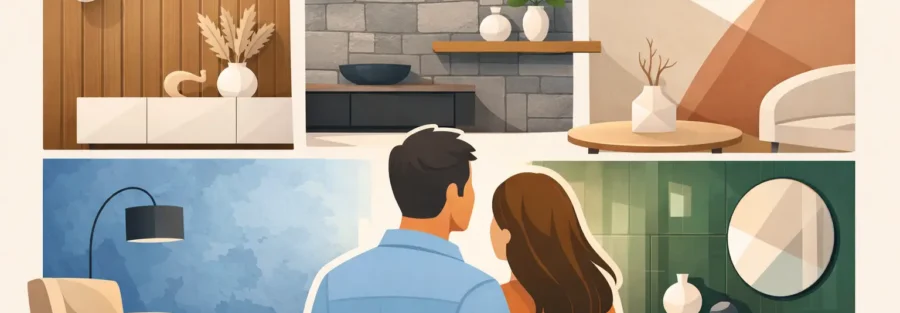
A feature wall should do more than introduce a different colour. The best finishes for feature walls create depth, draw attention to the right part of the room and still feel considered once the furniture, lighting and everyday life are in place. Get the finish right and a plain bedroom, reception room or hallway can feel deliberately designed rather than simply decorated.
The strongest choice depends on how the room is used, the amount of natural light it receives and the condition of the wall itself. A dramatic finish that suits a large, bright lounge may make a compact north-facing room feel closed in. Equally, a beautiful textured surface needs careful preparation if it is to look refined rather than uneven.
What makes a feature wall work?
A feature wall needs a purpose. It may frame a bed, fireplace, dining table, television area or entrance. In many homes, the most effective wall is the first one you see when entering the room, but that is not a fixed rule. The right wall is usually the one with the clearest visual role and the fewest interruptions from doors, radiators or awkward angles.
Think about what is already happening in the room. If the flooring, curtains and furnishings carry pattern, a calm painted finish may bring balance. If the scheme is largely neutral, texture or a richer tone can add the character that is missing. The finish should support the whole space, not compete with every other surface.
Preparation matters just as much as the decorative choice. Cracks, poorly filled holes, old lining paper and uneven plaster become more obvious beneath directional light, dark paint or specialist finishes. A professional assessment before decorating helps avoid the disappointment of choosing a premium finish for a wall that is not ready to receive it.
Best finishes for feature walls: options that last
Deep, flat paint for confident colour
Paint remains one of the most versatile feature-wall finishes. A deep green, warm clay, charcoal blue or softened burgundy can transform a room without introducing another material. It is especially effective in bedrooms, dining rooms and lounges where the wall is viewed from a distance and can provide a strong backdrop for artwork, shelving or a headboard.
A matt or durable flat-matt finish gives colour a rich, modern appearance because it absorbs light rather than bouncing it around the room. The trade-off is that very flat paint can show marks in busy households, particularly near children, pets or high-contact areas. For hallways and spaces used every day, a washable matt finish often offers a more practical balance while keeping the look understated.
Dark shades are not only for large rooms. Used on the wall behind a bed or fireplace, they can create depth in a smaller space. The key is to consider lighting carefully. Warm lamps, wall lights and daylight will all change how the colour reads across the day.
Limewash and mineral paint for soft movement
Limewash and mineral-based decorative paints bring a gently mottled, chalky appearance that cannot be replicated by a standard roller finish. They suit clients who want warmth and movement without using wallpaper or heavy texture. The surface can feel calm and natural, with subtle tonal variation that works particularly well in living rooms, bedrooms and character properties.
This finish is most successful on a well-prepared wall. The slight variation is intentional, but patchy repairs, poor sanding or inconsistent application are not. It also needs to be applied with the correct technique and in the right direction to produce a natural, layered effect.
Choose softer stone, sand, olive and smoky blue tones when the aim is a relaxed, timeless scheme. Stronger shades can work too, although the movement in the finish will be more pronounced. If you prefer a perfectly uniform wall, a conventional painted finish will be the better fit.
Decorative plaster for a tailored finish
Decorative plaster is a strong choice when you want the wall to feel architectural rather than simply coloured. From smooth Venetian-style polish to a more tactile concrete or stone effect, plaster finishes add depth that changes as light moves around the room. They can look particularly striking behind a dining table, in a hallway or around a fireplace feature.
The appeal lies in the craftsmanship. Each application has its own variation, so the finished wall feels bespoke rather than factory-made. A polished finish can reflect light elegantly, while a more natural plaster effect gives a quieter, contemporary texture.
There are practical considerations. Decorative plaster is less forgiving than paint if a section becomes damaged, and repairs may need blending by a skilled decorator to retain a consistent appearance. It is also important to resolve damp, movement or unstable existing finishes before work begins. A decorative surface should never be used to hide an underlying problem.
Timber panelling for structure and warmth
Wall panelling adds definition as well as visual interest. Shaker-style panels, slim vertical battens and tongue-and-groove designs can make a room feel more finished, especially where walls are otherwise plain or proportions feel unbalanced. Painted panelling works well in bedrooms, hallways, home offices and dining areas, bringing a sense of order without overwhelming the room.
Vertical details can make lower ceilings appear taller, while wider horizontal panelling can visually ground a large wall. The colour choice changes the effect dramatically. Match the panelling to the surrounding walls for subtle texture, or use a contrasting shade to make it the focal point.
Because it adds physical depth, panelling needs thoughtful planning around sockets, switches, skirting boards and existing joinery. In narrower rooms, very chunky profiles can reduce the sense of space. Clean proportions and precise installation are what keep the look smart and long-lasting.
Wallpaper for pattern, personality and scale
Wallpaper remains one of the best ways to introduce pattern, mural artwork or a fine textured effect. A single well-chosen wall can bring a room together by picking up colours already found in the upholstery, rug or curtains. It is ideal for a child’s bedroom, guest room, cloakroom or dining space where you want a more individual look.
The scale of the pattern matters. Large botanical prints and murals can be highly effective on one uninterrupted wall, but may feel busy in a small room with lots of furniture. Fine geometric designs, grasscloth-inspired textures and subtle metallic details tend to be easier to live with in compact spaces.
Wallpaper installation is all about preparation, accurate pattern matching and careful finishing around corners and fittings. Even high-quality paper will not disguise a poor surface beneath it. For a polished result, the wall should be made sound, smooth and properly lined where needed before hanging begins.
Microcement and concrete-effect finishes for modern spaces
For a more contemporary look, microcement and specialist concrete-effect finishes can create a continuous, understated surface with an industrial edge. They work well in modern extensions, home offices, reception areas and commercial settings, particularly when paired with timber, black metal details or warm lighting.
These finishes are not limited to grey. Softer greige, putty and warm taupe tones can offer the same depth without making the room feel cold. The visual appeal comes from restrained movement in the surface rather than a bold pattern.
As with plaster, the substrate must be stable and correctly prepared. This is not a finish to apply over loose paint, cracking walls or unresolved moisture. When the groundwork is right, it provides a durable and distinctive backdrop that feels quietly high-end.
Matching the finish to the room
In a busy hallway or family area, prioritise durability and cleanability. Washable paint or painted panelling is often a sensible choice because it offers impact without making maintenance difficult. For a bedroom, you can be more expressive with limewash, wallpaper or a deeper colour, as the wall receives less wear.
For rental properties, a feature wall should add appeal while remaining easy to refresh between tenancies. A well-applied painted finish is usually the most flexible option. In commercial spaces, consider how the finish reflects the business and how it will stand up to regular use, cleaning and changing displays.
Natural light should guide the palette as much as personal preference. North-facing rooms often benefit from warmer shades and finishes with some softness. Bright south-facing rooms can handle cooler colours, deeper tones and more pronounced texture. Always assess samples on the actual wall at different times of day before committing to the whole surface.
Make the finish feel intentional
A feature wall is most convincing when the surrounding details have been considered. Repeat one colour from the wall in a cushion, lampshade, artwork or rug, but avoid matching everything exactly. Give the wall breathing room where possible, and do not cover a striking finish with too many small frames or accessories.
Lighting deserves proper attention too. Wall washers, picture lights and table lamps can emphasise texture beautifully, while a harsh central ceiling light can flatten it. For textured plaster, limewash or microcement, test the lighting position before finalising the scheme.
At Adria P&D, we help clients choose finishes that suit both their vision and the way they live or work in the space. With the right preparation, materials and workmanship, a feature wall becomes a lasting part of the room rather than a short-lived decorating trend.
The best starting point is not a sample book but the wall itself: its condition, its light and the role it plays in your home. Once those are clear, the right finish becomes much easier to choose.