A crack that keeps returning after painting, a wall that sounds hollow when tapped, or a ceiling with a noticeable dip can change the whole feel of a room. The choice between plaster repair vs replastering is not simply about making the damage disappear. It is about finding out why it happened, protecting the surface beneath the finish, and choosing work that will still look right once the room is decorated.
For some walls, a careful local repair is all that is needed. For others, covering isolated faults only delays a larger problem. A proper assessment helps avoid wasted work and gives you a smooth, durable base for painting, wallpapering or a wider renovation.
Plaster repair vs replastering: the key difference
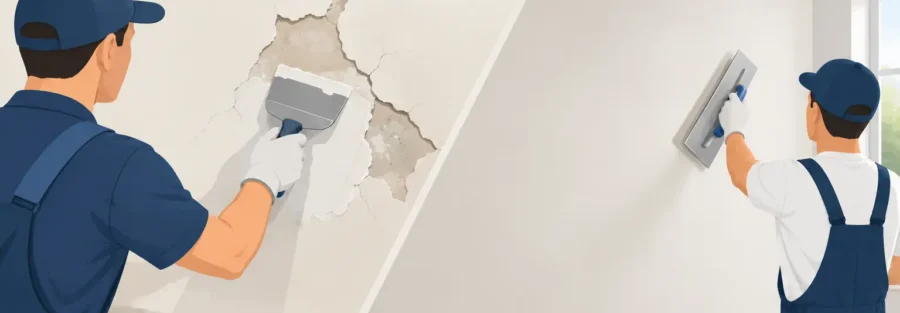
Plaster repair deals with a specific damaged area while keeping as much of the existing plaster as possible. This might involve opening up a crack, securing loose edges, patching a hole, filling shallow imperfections, and blending the repair into the surrounding wall or ceiling. It is a targeted solution, carried out when the wider surface remains sound.
Replastering is more extensive. It involves removing failed or unsuitable plaster from a larger area, preparing the background properly, and applying new plaster to create an even finish. In some cases, this may mean skimming over stable existing surfaces. In others, particularly where plaster has blown, become damp-damaged or deteriorated across a wall, it means taking the surface back further before rebuilding it.
Neither approach is automatically better. The right choice depends on the condition of the existing plaster, the cause of the damage, the age and construction of the property, and the standard of finish you want after decoration.
When plaster repair is the sensible choice
A well-executed repair can be an excellent option when the problem is local and the rest of the wall is firm, dry and flat. Small settlement cracks, minor accidental damage, screw holes from old fittings, and isolated areas of loose skim can often be repaired without disturbing the whole room.
The key is preparation. Cracks should not simply be filled over if there is movement or weak material around them. A decorator or plasterer needs to open and stabilise the affected area, remove anything loose, and use the appropriate materials to build up and finish the surface. Done properly, the repair should sit level with the surrounding plaster rather than leaving a visible raised patch once paint catches the light.
Repair is also a practical choice where original plaster is generally in good order. Older properties can have walls with slight character and variation, particularly in rooms that have not been modernised recently. Removing sound plaster unnecessarily can create more disruption than the project requires. Preserving stable surfaces while correcting visible defects is often the most proportionate approach.
That said, a neat-looking patch is not enough if moisture is still entering the wall or the background is moving. The cause must be resolved first. A repair applied over active damp, a leaking pipe, failed sealant around a window, or unstable masonry will not provide a lasting result.
Signs that a local repair may work
Local plaster repair is usually worth considering when cracks are fine and isolated, damage is limited to one small section, the wall feels solid when tapped, and there are no signs of staining, dampness or widespread flaking. It can also suit rooms where only a small area needs to be made good before redecorating.
An experienced eye matters here. What appears to be a cosmetic hairline crack may be a simple result of normal movement, but a wider crack that reopens could point to an issue below the surface. The goal is not to overreact to every imperfection. It is to make a sound judgement before decorative work begins.
When replastering is the better investment
Replastering is usually the more reliable route when failure is widespread rather than isolated. If several areas sound hollow, plaster is coming away from the wall, old finishes are cracked throughout, or the surface is uneven from repeated past repairs, a patch-by-patch approach can leave the room looking inconsistent.
Blown plaster is a common example. This happens when plaster loses its bond with the surface behind it, creating hollow sections that may eventually crumble or detach. Filling over a hollow area does not restore that bond. The loose material needs to be removed and the background prepared before new plaster is applied.
Replastering can also transform walls that have been heavily altered over time. Old wallpaper removal may expose damaged skim, poorly matched repairs, flaky paint layers or uneven surfaces around former fireplaces, moved doorways and electrical works. In these situations, a full skim or replaster provides a cleaner foundation for the next stage of the project.
Ceilings deserve particular care. A sagging, cracked or loose ceiling is not a cosmetic issue to ignore. Water damage, failed fixings or age-related deterioration may require sections to be removed and rebuilt rather than filled. Safety and stability come before achieving a smooth finish.
Damp must be dealt with before new plaster
Damp is one of the biggest reasons plaster fails prematurely. It can leave salts, staining, bubbling paint and soft, crumbly areas that no amount of filling will solve. Before replastering, the source of moisture needs to be identified and corrected. This could be a plumbing leak, condensation issue, damaged external pointing, a roof defect or water getting in around openings.
Once the wall has had time to dry appropriately, the preparation and plaster system must suit the background. Using the wrong material over a damp-affected wall can trap problems beneath a fresh finish. A professional approach considers the building as well as the visible surface.
What affects the final finish
Plastering is often judged when the room is painted, not when the trowels are put away. Light from a window, downlights and darker paint colours can reveal dips, ridges and poorly blended repair lines that were easy to miss beforehand. That is why the standard of preparation should match the planned decoration.
If you are choosing a flat, pale matt paint, small inconsistencies may be less noticeable. If you want a deep colour, feature lighting, polished decorative finish or crisp wallpaper, the wall needs to be especially even. Replastering may be worthwhile when the desired finish will expose the limitations of an older surface.
Drying time also needs to be respected. Fresh plaster must dry fully before painting so that moisture does not become trapped behind the coating. Rushing decoration can lead to patchiness, adhesion issues and an uneven result. The right sequence protects both the plasterwork and the final paint finish.
A practical way to make the decision
Start by looking beyond the most obvious crack or hole. Check whether the wall feels firm, whether similar damage appears elsewhere, and whether there are signs of moisture, staining or movement. Consider the room as a whole too. Repairing one section of a wall that is otherwise rough, uneven and covered in old patches may not give the transformation you expect.
It also helps to think about upcoming work. If you are planning new sockets, removing a chimney breast, installing shelving, changing lighting or carrying out a full room refurbishment, replastering after those alterations can be more efficient than repairing surfaces twice. Conversely, if the room is in good condition and simply needs a careful refresh, targeted repairs can preserve sound fabric and keep disruption focused.
For homeowners, landlords and business owners, the most dependable option is an on-site assessment before decoration begins. At Adria P&D, the focus is on identifying what the wall needs, preparing it properly and delivering a finish that supports the wider look of the space. That may be a precise repair or a complete new plaster surface, but it should always be work with a clear purpose.
A smooth wall should do more than hide yesterday’s damage. It should give your chosen colours, finishes and furnishings a clean backdrop for years to come.