
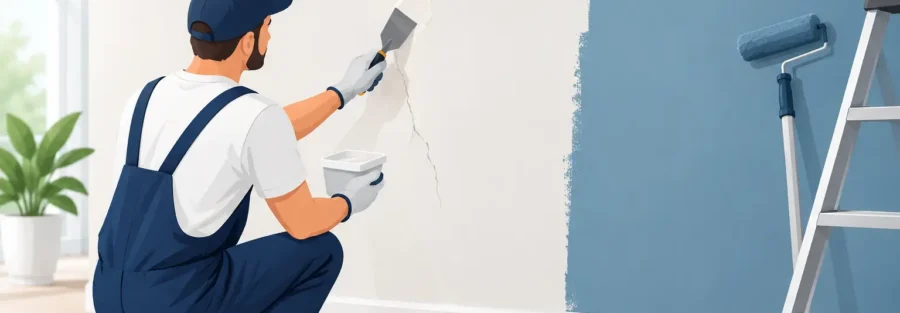
A fresh coat of paint can transform a room, but it will not hide a crack for long if the surface beneath has not been properly repaired. So, can decorators repair cracks? In many cases, yes. A skilled decorator can assess common wall and ceiling cracks, prepare the area correctly, carry out a lasting cosmetic repair and create the smooth finish your room needs. The key is knowing when a crack is simply part of a tired surface and when it could point to movement or another issue that needs attention first.
For homeowners, landlords and businesses, this distinction matters. Painting over a crack may make it disappear for a short while, but it often returns through the new finish. Proper preparation is what separates a neat-looking job from a result that continues to look good after the room is back in use.
Can Decorators Repair Cracks on Walls and Ceilings?
Decorators regularly repair minor and moderate cracks as part of wall preparation before painting or wallpapering. These are often caused by normal settling, changes in temperature, slight movement in plaster, or the natural ageing of a property. Hairline cracks around doors, windows, corners and plasterboard joints are particularly common in London homes.
The repair is not simply a case of applying filler over the visible line. A good decorator will first open the crack slightly where needed, removing loose material and creating a stable edge for the repair compound to bond to. The area is then filled in layers, allowed to dry, sanded smooth and sealed or primed before decorating begins.
Where a crack runs along a plasterboard joint, reinforcing tape or scrim may be used to help reduce the chance of it reopening. This is especially useful on ceilings and walls where small amounts of movement are more likely. Once prepared and painted, the repaired area should blend naturally with the rest of the surface rather than catching the eye in certain light.
Not Every Crack Is a Decorating Repair
Cracks can look similar at first glance, but their cause can be very different. A fine, stable crack in old plaster may be entirely suitable for a decorating repair. A widening diagonal crack, however, needs closer inspection before anyone starts preparing the wall.
It is sensible to pause and investigate if a crack is wider than a few millimetres, keeps returning after repair, appears suddenly, or is accompanied by other changes. Sticking doors or windows, uneven floors, gaps around skirting boards, damp patches and visible external cracking can all suggest that there is more going on than surface wear.
In these circumstances, painting and filling are not the answer on their own. The underlying cause may involve moisture, failed plaster, structural movement, drainage issues or previous building work. A dependable contractor should be open about this rather than covering the area and hoping it stays hidden. Addressing the cause first protects your property and avoids wasting effort on a finish that will not last.
Cracks Caused by Damp or Water Damage
Damp is one of the most common reasons a repair fails. If water is getting into a wall or ceiling, filler and paint will struggle to hold properly. You may see peeling paint, bubbling, staining, soft plaster or a musty smell alongside the crack.
The source of moisture needs to be resolved and the affected area fully dried before repair work starts. Depending on the damage, loose plaster may need to be removed and made good before a decorative finish can be applied. This can take more care than a standard crack repair, but it is the right route for a sound and presentable result.
Cracks Around Newly Completed Work
It is also common to see fine cracks after alterations, plastering or building work. Materials dry and settle at different rates, and joints between new and old surfaces can be prone to movement. This does not automatically mean the work is faulty, but it should be assessed before the final decoration takes place.
Using the right preparation materials and allowing sufficient drying time makes a significant difference. Rushing to paint a newly plastered or recently repaired wall can trap problems beneath the finish and leave you with avoidable touch-ups later.
What a Proper Crack Repair Involves
Lasting decorative repairs rely on methodical preparation. First, the surrounding surface is checked for hollow, loose or damaged plaster. Any unstable material must be removed, because a repair is only as good as the surface holding it in place.
The crack is then cleaned and prepared so the filler can bond properly. Deep cracks are usually built up in stages rather than filled heavily in one go, which helps prevent shrinkage and weak spots. Where movement is likely at a joint, a reinforcing tape may be bedded into the repair.
After drying, the area is carefully sanded to level it with the wall or ceiling. This is where attention to detail shows. A repair can feel smooth to the hand but still show under paint if the edges have not been feathered correctly. Priming the repaired section helps create an even surface, particularly where old paint, bare plaster and filler meet.
Only then is the room ready for its chosen paint finish. Matt paint can be forgiving, while silk, satin and other finishes that reflect more light tend to reveal surface imperfections. Strong daylight and feature lighting can do the same, so the preparation needs to match the room and the finish you have in mind.
When Full Replastering or Building Work Is Better
Sometimes individual crack repairs are no longer the most sensible option. If a wall has extensive crazing, repeated patches, large areas of blown plaster or widespread damage from damp, a more substantial repair may deliver a better long-term finish.
This could mean removing failed plaster, repairing the background and replastering all or part of the wall. For properties undergoing refurbishment, it is often more efficient to deal with these defects before new flooring, joinery or decoration is completed. It keeps the project coordinated and prevents one trade’s work from spoiling another’s finish.
This is where a company able to manage both decorating and general building work can be particularly helpful. Instead of passing a problem between separate trades, the repair and finishing stages can be planned together, with one clear standard for the final result.
How to Prepare for a Visit From a Decorator
You do not need to diagnose every crack yourself. It is useful, though, to note when you first noticed it and whether it has changed. If the crack has been repaired before, mention that too. This gives the decorator a clearer picture of whether it is likely to be a straightforward surface issue or something that needs further investigation.
Try not to fill the crack immediately with a quick household product if you want a professional assessment. Loose or poorly applied filler can conceal the true condition of the wall and add unnecessary preparation work. Clear access to the affected area and good lighting will help the survey be more accurate.
For rental properties, resolving cracks before a tenancy begins or between lets can make a meaningful difference to presentation. In commercial spaces, well-prepared walls support a professional environment and reduce the disruption of repeated cosmetic repairs.
The Finish Depends on What Happens Before the Paint
Crack repair is often an unseen part of decorating, but it has a major effect on the completed room. Clean lines, smooth walls and durable paintwork begin with sound preparation, not the final coat. The right approach depends on the crack, the condition of the surrounding surface and what has caused the damage in the first place.
If you are planning to refresh a property in North London, Adria P&D can assess the condition of your walls and ceilings as part of a tailored decorating project. A careful inspection before work begins gives you clarity on the right repair route and helps ensure your finished space looks considered, well cared for and ready to enjoy.